Best Sunscreen for Kids 10–12 Years Old: A Parent’s Guide
Kids aged 10–12 need daily broad-spectrum sunscreen with at least SPF 30, although SPF 50 is recommended, particularly during outdoor activities. Look for mineral formulas containing zinc oxide, water-resistant protection, and gentle ingredients that are free from artificial fragrances and harsh chemicals. Reapply every two hours and after swimming or sweating to maintain consistent protection.
The pre-teen years are an important stage for both children and their skin. Children aged 10 to 12 spend more time outdoors playing sports, cycling to school, attending summer camps, and enjoying activities with friends, often without a parent nearby to remind them to reapply sunscreen. While this growing independence is exciting, it can also mean that sun protection is easily overlooked.
UV damage does not always show immediate signs. A child can accumulate significant skin damage without ever experiencing a visible sunburn. Research consistently shows that UV exposure during childhood contributes to long-term skin concerns, making healthy sun protection habits one of the most valuable investments parents can make in their child's wellbeing.
Not all sunscreens are created equal. Some leave a white cast, others sting sensitive eyes, and many contain ingredients that may not be suitable for young skin. This guide covers everything parents need to know, including SPF levels, mineral versus chemical formulas, application tips, and product recommendations designed specifically for children.
Why Is Sunscreen for Kids Essential During the Pre-Teen Years?
Does Children's Skin Remain Vulnerable to UV Damage?
Yes. Children's skin produces less melanin than adult skin, providing less natural protection against ultraviolet radiation. Both UVA rays, which penetrate deeply and contribute to long-term skin changes, and UVB rays, which cause sunburn, can be harmful from an early age.
UV exposure is cumulative. Every unprotected hour spent in the sun contributes to a lifetime of exposure. Dermatologists widely recommend establishing sun protection habits before the age of 18, when the skin is still developing and more susceptible to UV damage.
How Do Outdoor Sports and School Activities Increase Sun Exposure in Children Aged 10–12?
At this age, children are often involved in school sports, after-school activities, and weekend adventures. Football practice, swimming lessons, cycling trips, and outdoor PE lessons can result in hours of direct sun exposure each week, often during peak UV hours between 10 am and 4 pm.
Unlike younger children who are closely supervised, pre-teens often apply sunscreen themselves or forget to apply it altogether. A children's sunscreen that is easy and quick to use makes independent application much more likely.
Why Does Daily Sun Protection Help Prevent Sunburn and Long-Term Skin Concerns?
Repeated sunburn during childhood significantly increases the risk of long-term skin damage. The American Academy of Dermatology recommends broad-spectrum SPF 30 or higher as the minimum level for daily use. Higher SPF options, such as SPF 50, provide an additional level of protection for children who spend extended periods outdoors.
How Does Starting Sun Protection Early Build Lifelong Healthy Habits?
Habits formed during childhood often last a lifetime. Teaching a child aged 10 to 12 to apply sun cream as part of their daily routine, alongside brushing their teeth and washing their face, helps establish healthy habits that support lifelong skin health.
What to Look for When Choosing a Sunscreen for Kids
Why Does Broad-Spectrum UVA and UVB Protection Matter for Children?
Broad-spectrum sunscreen protects against both UVA and UVB rays. UVA rays can cause deeper skin damage that is not immediately visible, while UVB rays are responsible for sunburn. A product labelled "broad-spectrum" helps protect against both types of UV radiation.
What SPF Level Is Best for Children Aged 10–12?
SPF 30 blocks approximately 97% of UVB rays, while SPF 50 blocks approximately 98%. For children who spend significant time outdoors, particularly during summer or in high-altitude environments, SPF 50 offers an additional layer of protection. It is widely regarded as the gold standard for children's sunscreen.
Why Should Children's Sunscreen Be Water-Resistant?
Active children sweat, swim, and dry themselves with towels. A water-resistant sunscreen helps maintain protection for 40 to 80 minutes while in the water, depending on the product. This makes it especially important for beach trips, swimming sessions, and sporting activities.
What Ingredients Are Gentlest on Young Skin?
Pre-teen skin can be sensitive and prone to irritation. The best sun cream for children contains gentle, skin-friendly ingredients that hydrate and soothe rather than irritate. Look for formulas free from parabens, sulphates, phthalates, and synthetic fragrances.
Why Does Easy Application Encourage Consistent Use?
A sunscreen lotion that absorbs quickly, does not leave a white cast, and feels comfortable on the skin is far more likely to be used and reapplied. Lightweight, non-greasy formulas make daily application simple and convenient rather than a chore.
Understanding SPF and Why It Matters for Kids
What Does SPF Mean?
SPF stands for Sun Protection Factor. The number indicates how long the sun's UVB radiation would take to redden protected skin compared with unprotected skin. SPF 30 means it would take approximately 30 times longer for skin to burn than without protection, provided the sunscreen is applied correctly and in sufficient quantities.
What Is the Difference Between SPF 30 and SPF 50 for Children?
Both SPF 30 and SPF 50 provide strong protection when applied and reapplied correctly. SPF 50 is generally the better choice for children who spend extended periods outdoors because it provides slightly higher protection and a greater margin for error when application is uneven, which is common among self-applying pre-teens.
How Often Should Children's Sunscreen Be Reapplied?
Children's sunscreen should be reapplied every two hours during sun exposure, regardless of the SPF level. It should also be reapplied immediately after swimming, towel drying, or excessive sweating.
What Are Common SPF Myths Parents Should Avoid?
SPF 100 blocks 100% of UV rays: No sunscreen blocks 100% of UV radiation. SPF 100 blocks approximately 99% of UVB rays, which is only slightly more than SPF 50.
Waterproof means you do not need to reapply: All sunscreens require reapplication after water exposure, even those labelled as water-resistant.
Cloudy days mean sun protection is not necessary: Up to 80% of UV rays can pass through clouds, making daily sun protection important regardless of the weather.
Mineral vs. Chemical Sunscreen for Kids

What Is Mineral Sunscreen?
Mineral sunscreen, also known as physical sunscreen, uses naturally derived minerals to create a protective barrier on the skin's surface. Unlike chemical sunscreens, mineral formulas begin working immediately after application and do not require time to absorb into the skin before providing protection.
What Are the Benefits of Zinc Oxide-Based Protection for Children?
Zinc oxide is the primary active ingredient found in many mineral sunscreens. Non-nano zinc oxide remains on the surface of the skin rather than being absorbed, making it a popular choice for parents who wish to reduce exposure to chemical ingredients. It provides broad-spectrum protection against both UVA and UVB rays and is generally well tolerated by sensitive skin.
Why Do Many Parents Prefer Mineral Formulas for Pre-Teens?
Mineral sunscreens do not contain chemical UV filters such as oxybenzone and octinoxate. While research into these ingredients is ongoing, some studies have raised concerns about skin absorption and potential hormonal effects. As a result, many parents choose mineral sunscreens as a precautionary option for their children.
How Do You Choose a Safe and Effective Sun Protection Formula for Children?
When selecting a mineral sunscreen for children, look for a formula that is:
-
Broad-spectrum, providing protection against both UVA and UVB rays
-
SPF 50
-
Water-resistant
-
Free from parabens, sulphates and synthetic fragrances
-
Dermatologically tested
Ingredients to Look for in the Best Sun Cream for Kids
Zinc Oxide
Zinc oxide is widely regarded as the gold standard for mineral UV protection. Non-nano zinc oxide provides broad-spectrum coverage and is gentle enough for sensitive and reactive skin.
Titanium Dioxide
Titanium dioxide is another mineral UV filter that works effectively alongside zinc oxide. It offers strong UVB protection and is generally suitable for young and sensitive skin.
Aloe Vera
Known for its soothing and hydrating properties, aloe vera helps calm the skin after sun exposure while supporting the skin's natural barrier.
Vitamin E (Tocopheryl Acetate)
Vitamin E is a powerful antioxidant that helps protect the skin from free radical damage caused by UV exposure. It also helps maintain skin hydration and softness.
Moisturising and Skin-Soothing Ingredients
Look for ingredients such as glycerin, which helps lock in moisture, niacinamide (Vitamin B3), which supports and strengthens the skin barrier, panthenol (Vitamin B5), which helps soothe the skin, and sodium hyaluronate for lightweight hydration without leaving a greasy feeling.
Ingredients Parents May Want to Avoid in Children's Sun Cream

Artificial Fragrances
Synthetic fragrances are among the most common causes of skin irritation in children. Choose products that are fragrance-free or contain only naturally derived fragrance ingredients.
Harsh Chemical UV Filters
Chemical UV filters such as oxybenzone, octinoxate, homosalate and avobenzone can be absorbed into the skin. Although these ingredients are approved for use, some parents of children with sensitive skin prefer mineral-based alternatives.
Potential Skin Irritants
Parabens, sulphates (SLS/SLES), phthalates, mineral oil and silicones are ingredients many parents choose to avoid in children's sunscreen. These ingredients may disrupt the skin's natural balance or contribute to sensitivity over time.
Ingredients That May Cause Sensitivity
Alcohol, particularly when listed near the top of the ingredient list, and certain preservatives may cause dryness or irritation with repeated use. Look for products specifically formulated for sensitive skin.
How to Choose the Best Children's Sun Cream Based on Skin Type
Sensitive Skin
Choose a mineral-based formula containing zinc oxide and free from artificial fragrances and known irritants. Look for products labelled "dermatologically tested" and "hypoallergenic".
Dry Skin
Prioritise formulas containing hydrating ingredients such as glycerin, sodium hyaluronate and panthenol. A richer, creamier texture can help provide lasting moisture alongside sun protection.
Oily Skin
A lightweight, non-greasy formula that absorbs quickly without leaving residue is ideal. Look for gel-cream or fluid textures labelled "non-comedogenic".
Active and Sporty Children
Water-resistant sun cream is essential for active children. Choose an SPF 50 formula with a water-resistance rating of 40 to 80 minutes and a texture that remains comfortable during sports and outdoor activities without irritating the eyes.
Children Who Spend Extended Periods Outdoors
Combine an SPF 50 mineral sunscreen with additional sun protection measures, such as protective clothing, wide-brimmed hats and UV-protective sunglasses. Reapplying sunscreen every two hours is essential for children who spend extended periods outdoors.
Recommended best sunscreen for kids from Lav Kids


Mineral Sunscreen


Sun Ready Set

Complete Face Trio
SPF 50 Mineral Sunscreen
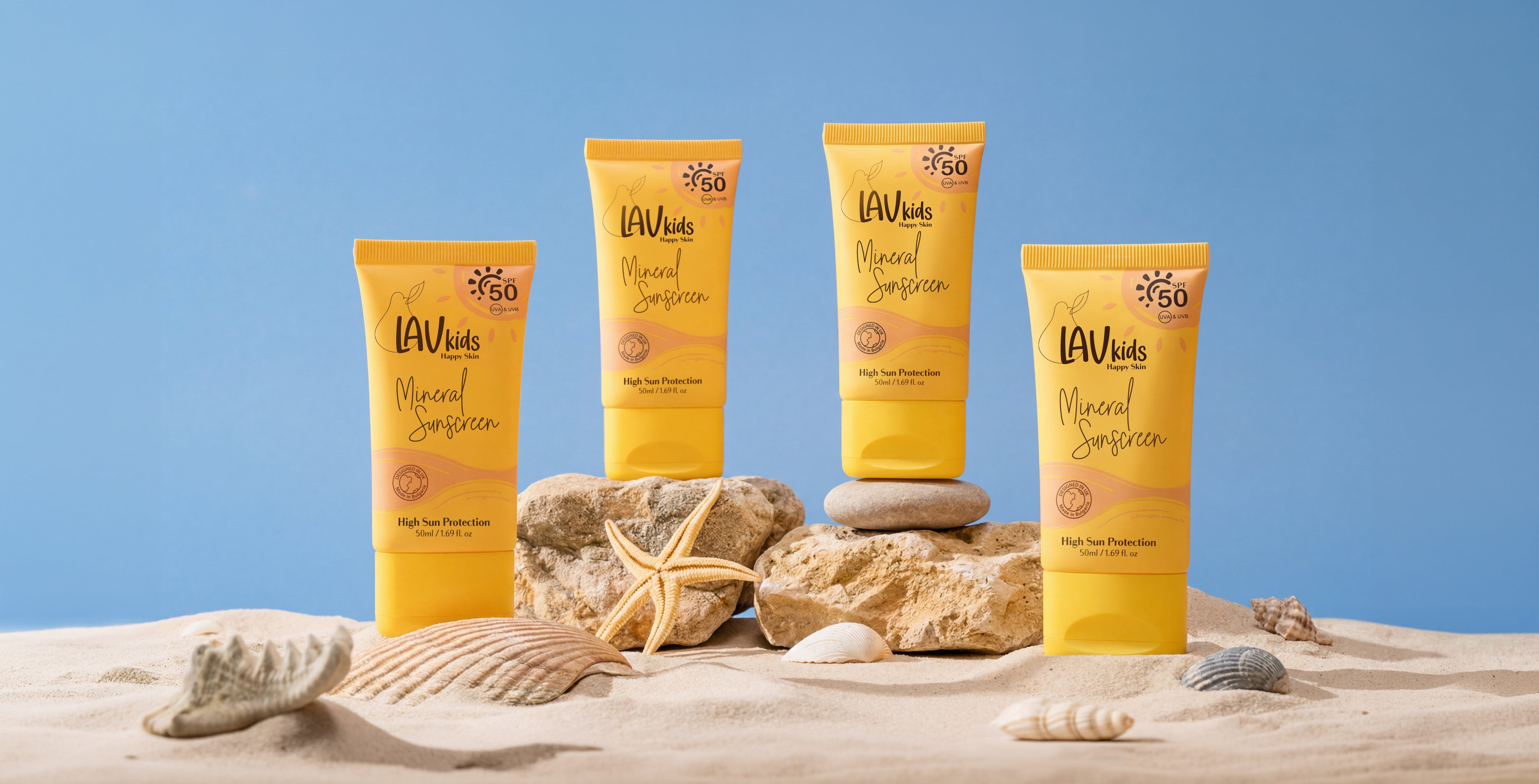
The Lav Kids SPF 50 Mineral Sunscreen provides broad-spectrum protection using non-nano zinc oxide. It is gentle on delicate skin and effective against both UVA and UVB rays. The lightweight, non-greasy formula absorbs easily without leaving a white cast, making it ideal for everyday outdoor activities.
Key ingredients include niacinamide to help strengthen and soothe the skin barrier, glycerin for long-lasting hydration, and Vitamin E for antioxidant support. The formula is free from parabens, sulphates, phthalates, mineral oil and silicones. Dermatologically tested for children aged 3 and above, it is an excellent choice for children with sensitive skin.
Sun Ready Set
The Sun Ready Set is a complete sun protection bundle that combines the SPF 50 Mineral Sunscreen with a moisturising face cream and a lip butter. It is an excellent option for holidays, school trips and outdoor adventures, providing everything a pre-teen needs to keep their skin protected and hydrated in one convenient set.
All products are cruelty-free, free from harsh chemicals and made with naturally derived fragrances.
Complete Face Trio
The Complete Face Trio includes a foaming facial cleanser, a moisturising face cream and a moisturising lip butter. While primarily focused on daily skincare rather than sun protection alone, this bundle helps children establish healthy skincare habits that work alongside a consistent SPF routine.
Building a simple cleanse, moisturise and protect routine during the pre-teen years can help support healthy skin for years to come.
Why Parents Choose Lav Kids
Lav Kids develops every product with children's unique skincare needs in mind. All products are dermatologically tested, cruelty-free and free from synthetic fragrances and harsh ingredients that may irritate young skin.
The SPF 50 Mineral Sunscreen has earned excellent reviews from parents who appreciate its gentle formula, easy application and reliable protection during long days outdoors. For parents looking for effective and trustworthy sun protection, Lav Kids offers products specifically designed for growing skin.
How to Apply Sunscreen for Kids Correctly
Apply Before Going Outdoors
Apply sunscreen at least 10 to 15 minutes before heading outdoors. Although mineral sunscreen begins working immediately after application, applying it before leaving the house helps ensure complete and even coverage.
Use the Correct Amount
Many people do not apply enough sunscreen. For a child's entire body, approximately one ounce of sunscreen, roughly equivalent to a shot glass, is recommended. For the face and neck, a coin-sized amount is generally sufficient.
Don't Forget the Ears, Neck and Feet
Commonly missed areas include the ears, the back of the neck, the tops of the feet and the backs of the hands. These areas are often exposed to the sun and should be covered carefully.
Reapply Every Two Hours
Children's sunscreen should be reapplied every two hours during sun exposure. Regardless of the SPF level, sunscreen becomes less effective over time when exposed to UV rays.
Reapply After Swimming and Sweating
Even water-resistant formulas need to be reapplied after swimming, drying off with a towel or excessive sweating. Reapplying promptly helps maintain effective protection.
Common Mistakes Parents Make When Using Children's Sunscreen
Applying Too Little Product
This is one of the most common mistakes. Applying too little sunscreen significantly reduces the level of protection provided.
Forgetting to Reapply
A single morning application is not enough for a full day outdoors. Regular reapplication is essential for continuous protection.
Skipping Sunscreen on Cloudy Days
UV rays can penetrate cloud cover, making sunscreen necessary even on overcast days.
Missing High-Exposure Areas
The nose, cheeks, shoulders and tops of the ears receive some of the most direct sun exposure. These areas require particular attention during application.
Using Expired Sunscreen
Sunscreen becomes less effective over time. Always check expiry dates and replace products that have expired or have been stored in excessive heat.
Additional Sun Safety Tips for Children Aged 10–12
Wear Protective Clothing
Long-sleeved UV-protective clothing and rash vests provide an additional physical barrier against sun exposure and are particularly useful for swimming and water sports.
Use Wide-Brimmed Hats
A hat with a wide brim helps protect the face, ears and neck, areas that are often missed when applying sunscreen.
Wear UV-Protective Sunglasses
UV exposure can affect the eyes as well as the skin. Choose sunglasses labelled "UV400" or "100% UV Protection" for children who spend extended periods outdoors.
Seek Shade During Peak Sun Hours
UV rays are strongest between 10 am and 4 pm. Encouraging children to spend time in the shade during these hours can help reduce overall sun exposure.
Make Sun Protection Part of the Daily Routine
The most effective sun protection is consistent sun protection. Including SPF application as part of a child's morning routine, alongside washing their face and brushing their teeth, helps turn it into a lasting habit.
Protect Their Skin Every Day
Choosing the right sunscreen for children aged 10 to 12 does not need to be complicated. Mineral formulas with broad-spectrum SPF 50 protection, water-resistant coverage and gentle ingredients offer excellent protection for this age group.
Combined with regular application, frequent reapplication and additional sun-safe habits such as protective clothing and seeking shade, these products can help create a reliable and effective sun protection routine.
Lav Kids SPF 50 Mineral Sunscreen offers broad-spectrum protection while remaining gentle enough for sensitive skin. It is designed for active children and formulated without harsh ingredients that many parents prefer to avoid. Explore the full Lav Kids sun protection range to find products that suit your child's daily routine.
FAQS :
What SPF Is Best for Kids?
SPF 50 is recommended for most children, particularly those who spend regular time outdoors. It blocks approximately 98% of UVB rays and provides an added level of protection when sunscreen is not applied perfectly. SPF 30 remains a suitable minimum for lower-exposure days.
How Often Should Children's Sunscreen Be Reapplied?
Children's sunscreen should be reapplied every two hours during outdoor activities. It should also be reapplied immediately after swimming, towel drying or excessive sweating.
Is Mineral Sunscreen Better for Children?
Many parents prefer mineral sunscreen because ingredients such as non-nano zinc oxide and titanium dioxide remain on the surface of the skin rather than being absorbed. Mineral formulas are also less likely to irritate sensitive skin.
Can Children Use Adult Sunscreen?
Adult sunscreens can provide effective UV protection, but many contain fragrances, chemical UV filters and other ingredients that may not be suitable for young skin. Products specifically formulated for children are often a gentler option.
What Is the Best Sun Cream for Children With Sensitive Skin?
A mineral sunscreen containing non-nano zinc oxide and free from parabens, synthetic fragrances, sulphates and harsh preservatives is generally the best choice. Lav Kids SPF 50 Mineral Sunscreen meets these criteria and is dermatologically tested for children aged 3 and above, making it a suitable option for pre-teens with sensitive skin.