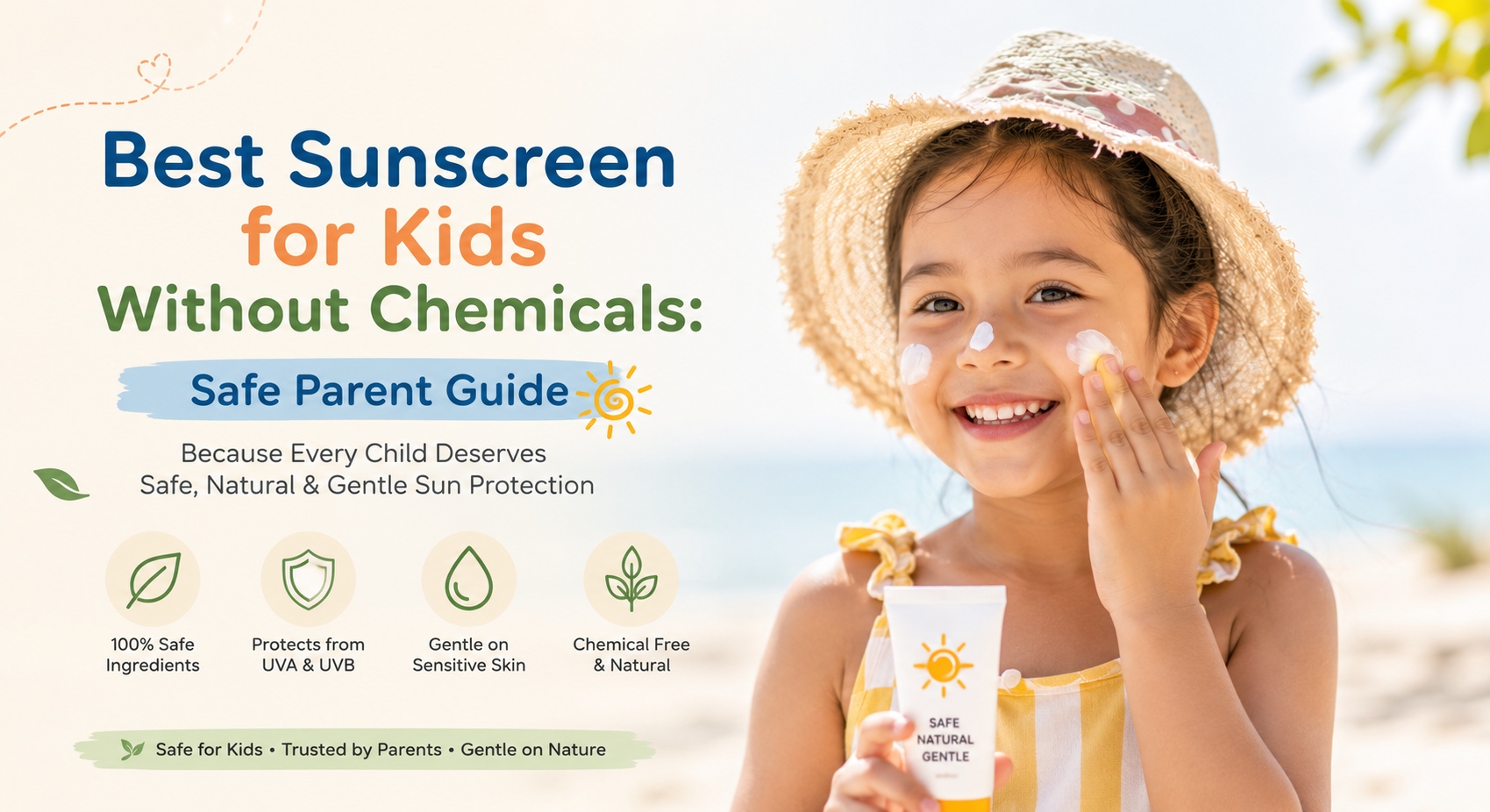
Safe, Non-Toxic Sunscreen for Kids: A Parent's Guide
Finding the best sunscreen for kids is no longer just about choosing a high SPF. Parents today want gentle, lightweight, and skin-friendly sun protection that works well for delicate skin without relying on harsh ingredients. As awareness of children’s skincare grows, more families are looking for non-toxic, sensitive-skin-friendly options that fit easily into an everyday routine.
Children's skin is delicate and can be more susceptible to irritation from certain skincare ingredients, including fragrances. Because of this, choosing a daily SPF requires careful label reading and a clear understanding of what goes into the bottle.
The goal is simple: keep children protected from harmful UV rays while caring for their developing skin barriers. By learning what to look for and what to avoid, parents can confidently select the best sunscreen for kids. This guide explains how to choose suitable sun protection and build a simple, effective routine for your family.
Why Kids Need Special Sunscreen Protection
Children's sun protection needs deserve special attention. Choosing a suitable sunscreen and applying it correctly can help protect young skin from sunburn and cumulative UV damage.
Children's Skin Is More Sensitive to UV Rays
Children can experience sunburn quickly, especially during prolonged outdoor activities. Their skin needs reliable protection whenever they spend time outdoors. A broad-spectrum sunscreen with an appropriate SPF helps protect against both UVA and UVB rays.
For everyday use, choose a sunscreen that suits your child's age and skin type. Follow the product label and combine sunscreen with protective clothing, shade, and hats.
Why Sun Damage Can Start Early
Sun exposure adds up over time. Excessive UV exposure and severe sunburns during childhood can increase the risk of skin cancer later in life. Establishing sun-safe habits early helps protect children's skin as they grow.
Make sunscreen part of your family's outdoor routine, particularly during holidays, sports, playground visits, and other activities in direct sunlight.
How Gentle SPF Protects the Skin Barrier
A healthy skin barrier helps retain moisture and protect the skin from environmental irritants. Some sunscreen formulas contain fragrances or other ingredients that may irritate sensitive skin.
A gentle mineral sunscreen can be a suitable option for children who are sensitive to certain ingredients. Look for a formula that provides broad-spectrum protection and feels comfortable on your child's skin.
Parents can also keep their children's skincare routine simple by choosing gentle cleansing products and moisturisers. Learn more about skincare for kids to help build a consistent daily care routine.
Why Adult Sunscreen Is Not Always Ideal for Kids
Some adult sunscreens contain fragrances or other ingredients that may irritate sensitive skin. However, not every adult sunscreen is unsuitable for children. The most important factors are the product's ingredients, sun protection rating, age recommendations, and suitability for your child's skin.
When choosing the best sunscreen for kids with sensitive skin, consider a fragrance-free formula and check the label for age guidance. If your child has a history of skin reactions, consult a healthcare professional for personalised advice.
What Does "Chemical-Free" Mean in Kids' Sunscreen?
When parents search for the best sunscreen for kids without chemicals, they are usually looking for mineral-based sunscreens. Technically, no sunscreen is completely chemical-free because all ingredients are made of chemicals, including naturally occurring minerals and water.
Mineral sunscreens use zinc oxide, titanium dioxide, or both as active ingredients. Understanding how these filters work can help parents make an informed choice.
Mineral Sunscreen vs. Chemical Sunscreen
Mineral sunscreens use zinc oxide or titanium dioxide to protect the skin from UV radiation. Organic UV filters, commonly called chemical sunscreen filters, absorb UV radiation and convert much of that energy into less harmful forms.
Both types can provide effective sun protection when formulated and used correctly. Mineral sunscreen may be preferable for children with sensitive skin, depending on the formula and individual tolerance.
When comparing products, look for:
- Broad-spectrum UVA and UVB protection.
- SPF 30 or higher for routine outdoor sun protection.
- Water resistance when swimming or sweating.
- Ingredients that suit your child's skin.
- Clear age recommendations and application instructions.
How Zinc Oxide Works
Zinc oxide is a mineral UV filter widely used in sunscreens. It helps protect against both UVA and UVB radiation, making it a useful ingredient in broad-spectrum sun protection.
Zinc oxide is also generally well tolerated by many people with sensitive skin. However, individual reactions can vary, so check the full ingredient list and follow the product's directions.
Why Many Parents Prefer Mineral SPF
Many parents prefer mineral sunscreen because zinc oxide and titanium dioxide are suitable UV filters for sensitive-skin-focused formulas. These products can be a practical option for children when the formulation meets their needs.
Apply sunscreen generously and evenly before sun exposure, following the product instructions. Reapply at least every two hours and after swimming, sweating, or towel drying, as directed on the label.
Understanding Non-Toxic Sun Protection
The term "non-toxic" is often used in marketing to describe products made without certain ingredients of concern. It is not a guarantee that a product will never cause irritation or an allergic reaction.
When choosing a non-toxic sunscreen for kids, focus on transparent ingredient lists, appropriate SPF, broad-spectrum protection, and products that meet relevant safety standards. Avoid relying on claims such as "natural" or "chemical-free" alone to judge whether a sunscreen is suitable.
Ingredients Parents Should Look for in the Best Sunscreen for Kids

A good children's sunscreen should do more than provide UV protection. It should feel comfortable on delicate skin and fit easily into a daily skincare routine. Here are some ingredients and formula features parents can look for when choosing the best sunscreen for kids.
Zinc Oxide
Zinc oxide is a widely used mineral UV filter that helps protect against both UVA and UVB rays when included in an appropriately formulated broad-spectrum sunscreen. It is often found in products designed for sensitive skin. Check the product label to confirm its SPF rating, broad-spectrum protection, and age recommendations.
Titanium Dioxide
Titanium dioxide is another mineral UV filter commonly used in sunscreen. It helps protect against UV radiation and is often combined with zinc oxide in mineral formulations. The level of protection depends on the complete formula, so choose a broad-spectrum product rather than relying on a single ingredient.
Aloe Vera
Aloe vera is commonly used in skincare products for its moisturising and soothing properties. When included in a sunscreen formula, it may help the skin feel comfortable and hydrated. However, children with sensitive skin can react to botanical ingredients, so check the full ingredient list before use.
Shea Butter
Shea butter is an emollient that helps soften the skin and reduce moisture loss. It may be useful in sunscreen formulations designed for dry skin. Choose a product with a texture that spreads easily without feeling excessively heavy.
Vitamin E
Vitamin E is an antioxidant used in many skincare products. Its benefits depend on the formulation, and individual skin sensitivity should always be considered when choosing products for children.
Fragrance-Free Formulas
Fragrance-free sunscreen can be a useful option for children with sensitive skin. Fragrances may trigger irritation or allergic contact dermatitis in some individuals. If your child is prone to skin reactions, consider a simple fragrance-free formula and check the ingredient list carefully.
Ingredients and Formula Features Parents May Prefer to Avoid
Knowing which ingredients may irritate your child's skin can make choosing sunscreen easier. Not every ingredient is unsuitable for every child, so consider individual sensitivities and the product's overall formulation.
Strong Fragrances
Fragrances can cause irritation or allergic reactions in some children, particularly those with sensitive skin. If your child has experienced reactions to scented products, consider a fragrance-free sunscreen.
Drying Alcohols
Some sunscreen formulas contain alcohol to improve texture or help the product dry quickly. Certain types of alcohol can be drying, although not all alcohols have the same effect. If your child's skin is dry or sensitive, check the ingredient list and choose a formula that feels comfortable.
Sticky or Greasy Formulas
A sunscreen that feels sticky or difficult to spread can make daily application challenging. Choose a texture that glides smoothly over the skin and is comfortable enough for your child to wear regularly. Applying the product evenly is more important than choosing a particular texture.
Choosing UV Filters for Sensitive Skin
Different sunscreen filters can suit different skin types. Zinc oxide and titanium dioxide are mineral UV filters often considered by parents looking for sensitive-skin-friendly products. Other sunscreen filters can also provide effective protection when used as directed.
Rather than assuming that every chemical UV filter is harmful, choose a properly formulated, broad-spectrum sunscreen that meets applicable US safety and labeling requirements and suits your child's skin.
Best Mineral Sunscreen for Kids With Sensitive Skin
If your child has sensitive or easily irritated skin, sun protection requires a little extra care. A fragrance-free mineral sunscreen may be a suitable starting point, particularly if your child reacts to certain ingredients.
Look for a formula that provides broad-spectrum protection, has a comfortable texture, and is appropriate for your child's age. Avoid introducing several new skincare products at once, as this can make it more difficult to identify the cause of a reaction.
Moisturising can also help support the skin barrier. If your child already follows a skincare routine, keep it simple with gentle cleansing and a suitable moisturiser. You can read more about skincare for kids to help create a consistent routine.
If your child has eczema or another skin condition, ask a healthcare professional for advice on selecting suitable sunscreen. Stop using a product if it causes a reaction and seek medical guidance when necessary.
How to Choose a Non-Toxic Sunscreen for Kids in the US/IK
Parents searching for the best non-toxic sunscreen for kids often want a formula that provides reliable sun protection without ingredients they prefer to avoid. However, the term "non-toxic" is not a guarantee that a product will never cause irritation or an allergic reaction.
When comparing children's sunscreens in the US, consider these factors:
-
Broad-spectrum protection: Choose a sunscreen labeled broad spectrum to protect against UVA and UVB radiation.
-
SPF 30 or higher: The American Academy of Dermatology recommends broad-spectrum, water-resistant sunscreen with SPF 30 or higher.
-
Mineral UV filters: Consider zinc oxide or titanium dioxide if you prefer a mineral sunscreen.
-
Fragrance-free ingredients: This may be helpful for children who react to scented products.
-
Age suitability: Check the label for age recommendations and directions for use.
-
Water resistance: Choose a water-resistant formula when swimming or sweating, and follow its reapplication instructions.
When searching for the best sunscreen for kids without harsh ingredients, focus on the complete formulation rather than marketing terms alone. Mineral sunscreen can be a practical option for families who prefer zinc oxide or titanium dioxide as their UV filters.
A good non-toxic sunscreen for kids should also work alongside other sun-safety habits. Combine sunscreen with protective clothing, hats, shade, and breaks from direct sunlight, particularly during outdoor activities, sports, and family holidays.
What Makes a Good Family Sunscreen?
The best sunscreen for families should provide reliable sun protection and be convenient enough for everyday use. Look for broad-spectrum coverage, an appropriate SPF, a comfortable texture, and clear instructions for application and reapplication.
Best Sunscreen for Kids in the US/UK: What Parents Should Consider
Sun protection is important throughout the year, not just during summer or beach holidays. Children can receive UV exposure on cloudy days, during outdoor sports, and while playing in the park.
Choose a sunscreen with at least SPF 30 and broad-spectrum protection. For outdoor activities involving swimming or sweating, select a water-resistant formula and follow the label instructions.
For everyday family use, a lightweight formula that spreads easily may be more practical than a thick product designed mainly for occasional beach trips. The best sunscreen for kids is one that provides suitable protection and can be applied consistently.
Parents should also check the product's labeling and age recommendations. For babies younger than six months, seek advice from a pediatrician and prioritise shade and protective clothing.
How to Apply Sunscreen Properly on Children
Even a high-quality sunscreen cannot provide its intended protection if it is applied incorrectly. Follow these steps to make sun protection part of your child's daily routine.
Apply Sunscreen Before Going Outdoors
Follow the product label for application timing. Apply sunscreen generously and evenly to all exposed skin before sun exposure, allowing the recommended time for the product to settle if specified on the label.
Reapply Every Two Hours
Sunscreen gradually wears off during everyday activities. Reapply at least every two hours and after swimming, sweating, or towel drying, following the product instructions. Water-resistant sunscreen also needs reapplication.
Do Not Forget the Ears, Neck, and Hands
Areas such as the ears, back of the neck, and backs of the hands are easy to overlook. Apply sunscreen carefully to all exposed areas, avoiding direct contact with the eyes and following the label directions.
Use Sunscreen Beyond Beach Days
Sun exposure can happen during school breaks, walks, playground visits, and outdoor sports. Make sunscreen part of your routine whenever UV protection is needed, rather than saving it only for beach holidays.
Common Mistakes Parents Make When Choosing Kids' Sunscreen
Choosing sunscreen can feel overwhelming when many products make similar claims. Avoid these common mistakes to make a more informed decision.
Choosing Sunscreen Based Only on SPF
SPF mainly indicates protection against sunburn-causing UVB radiation. Broad-spectrum protection is also important because it covers UVA radiation. Choose a product with an appropriate SPF and broad-spectrum labeling rather than comparing SPF numbers alone.
Assuming Adult Sunscreen Is Always Unsuitable
Some adult sunscreens may be suitable for children, depending on the product label and ingredients. However, formulas containing fragrances or ingredients that irritate a particular child's skin may not be a good fit. Check the age recommendations and choose according to your child's needs.
Forgetting to Reapply
One application in the morning will not necessarily provide protection throughout the day. Reapply at least every two hours and after swimming, sweating, or towel drying, as directed on the label.
Ignoring Ingredient Labels
Do not rely on front-of-package claims such as "natural," "clean," or "non-toxic" alone. Read the ingredient list, check the active UV filters, and confirm that the sunscreen provides broad-spectrum protection.
Skipping Sunscreen on Cloudy Days
Cloud cover does not eliminate UV exposure. Check the UV index and follow sun-protection guidance even when the sky is overcast.
How to Build a Simple Sun Protection Routine for Kids
A predictable routine can make sun care easier for both parents and children. Keep the steps simple and choose products that suit your child's skin.
Morning Routine
- Gentle cleansing: Wash the face with water or a mild cleanser suited to your child's skin.
- Lightweight moisturiser: If needed, apply a gentle moisturiser to help keep the skin comfortable.
- Sunscreen: Apply a generous, even layer of broad-spectrum sunscreen with at least SPF 30 to exposed skin, following the product directions.
Parents can also keep their children's routine simple with appropriate kids' skincare essentials.
Outdoor Routine
- Reapply sunscreen: Keep sunscreen accessible so you can reapply it as directed.
- Wear protective clothing: Use hats, suitable clothing, and sunglasses where appropriate.
- Seek shade: Encourage breaks from direct sunlight, especially during periods of strong UV exposure.
- Stay hydrated: Offer children regular water breaks during outdoor activities.
Best Sunscreen for Kids From Lav-Kids
At Lav-Kids, children's skincare is designed to fit into simple everyday family routines. When choosing sun protection, parents should prioritise broad-spectrum coverage, age suitability, a comfortable formula, and clear application instructions.
For families looking for sunscreen options, visit the Lav-Kids sunscreen collection to review available products and their details.
The right sunscreen is one that provides appropriate protection and suits your child's individual needs. Combine it with protective clothing, shade, and regular reapplication to help children enjoy outdoor activities while taking care of their skin.


50 Mineral Sunscreen


Complete Face Trio


Daily Face Routine
SPF 50 Mineral Sunscreen
This mineral-based SPF protection is the ultimate everyday defence. It is formulated to be highly breathable and lightweight for everyday wear. Because it is so gentle for sensitive skin, parents can apply it without worrying about stinging eyes or irritated cheeks. The non-greasy finish for kids means dirt and sand won't stick to them, making it one of the absolute best non toxic sunscreen for kids available today.
Complete Face Trio
For complete skincare support, the Complete Face Trio simplifies your child's morning. It covers cleansing, hydration, and protection all in one easy package. Establishing an easy daily skincare routine early on is great for healthy skin habits that will last a lifetime.
Daily Face Routine
Simple daily skincare doesn't have to be a chore. Designed for gentle everyday use, the Daily Face Routine supports hydration and sun protection routines seamlessly. It is an incredibly beginner-friendly skincare set that gets kids comfortable with the idea of washing and protecting their skin without any fuss.
Tips for Choosing the Best Sunscreen for Kids in 2026
As skincare technology advances, the market will continue to evolve. Here is how to stay ahead when shopping for sun protection in the future.
Choose mineral sunscreen when possible
The consensus among paediatric dermatologists remains clear: physical mineral blockers are the safest, most reliable choice for young skin.
Keep routines simple
Children do not need ten-step skincare routines. A gentle wash and a high-quality SPF are usually more than enough.
Look for lightweight textures
Heavy, chalky pastes are a thing of the past. Modern formulations utilise micronized zinc oxide to provide a lightweight texture that rubs in easily without leaving a severe white cast.
Prioritise sensitive skin-friendly formulas
Even if your child doesn't actively suffer from eczema, choosing sensitive skin-friendly formulas ensures you are treating their delicate skin barrier with the utmost respect.
Reapply sunscreen consistently
No matter how advanced sunscreens become, they will always need to be reapplied. Build the habit now so it becomes second nature to your family.
Final Thoughts on Safe Sun Protection for Children
Protecting your child from the sun is one of the most vital daily tasks of parenting. By understanding the ingredients you use and avoiding unnecessary synthetic chemicals, you are setting your child up for a lifetime of healthy, resilient skin.
Always prioritise simple, safe sun care routines over complicated products. When you choose the best sunscreen for kids without chemicals, you are opting for gentle, mineral-based protection that works with your child's natural skin barrier, not against it. Whether you are dealing with a cloudy school run or a bright beach day, establishing early skincare habits makes all the difference.
If you are ready to simplify your morning routine, explore the gentle, effective options from Lav-Kids. You'll find everything you need to keep your little ones safely protected and comfortably hydrated all year long."
Frequently Asked Questions
The safest choice is a mineral sunscreen that uses zinc oxide or titanium dioxide as its active ingredient. These provide physical protection by reflecting UV rays, completely avoiding the need for chemical absorbers like oxybenzone or octinoxate.
Yes. Mineral sunscreens sit on top of the skin rather than absorbing into the bloodstream. They are far less likely to cause allergic reactions, skin irritation, or eye stinging, making them the preferred choice of paediatricians and dermatologists.
For reactive or eczema-prone skin, look for a 100% mineral, fragrance-free formula. The best non toxic sunscreen for kids with sensitive skin will also contain soothing ingredients like aloe vera or shea butter to protect the skin barrier from moisture loss.
Absolutely. Children should wear sunscreen every single day, regardless of the season or cloud cover. Daily application is the most effective way to prevent long-term UV damage and maintain healthy skin.
A sunscreen without chemicals uses mineral UV filters instead of chemical filters to help protect the skin from the sun. Lav Kids sunscreen is formulated to provide gentle sun protection, making it suitable for children's delicate skin.